







Search Results for: Joining a Franchise Brand

Which brand is reliable when joining a coffee shop franchise? How much does the initial investment actually cost?
In the past year or two, the popularity of coffee entrepreneurship has continued to rise, and many office workers have begun to entertain the idea of opening a shop and becoming their own boss. A coffee shop that seems to have low barriers to entry, requires little investment, and has an artistic atmosphere has become the ideal project in many people's minds. But when they actually start, they discover that they have no idea where to begin, from site selection to promotion, so franchise chains have become a popular option. Advertisements promising "zero threshold" and "easy to be your own boss" are everywhere, but is the reality really that rosy? This article sorts out the main models of coffee franchising today, helps you calculate the upfront investment clearly, and gives the key points to note when choosing a franchise brand, in the hope of offering some reference for those who are still hesitating. [more…]
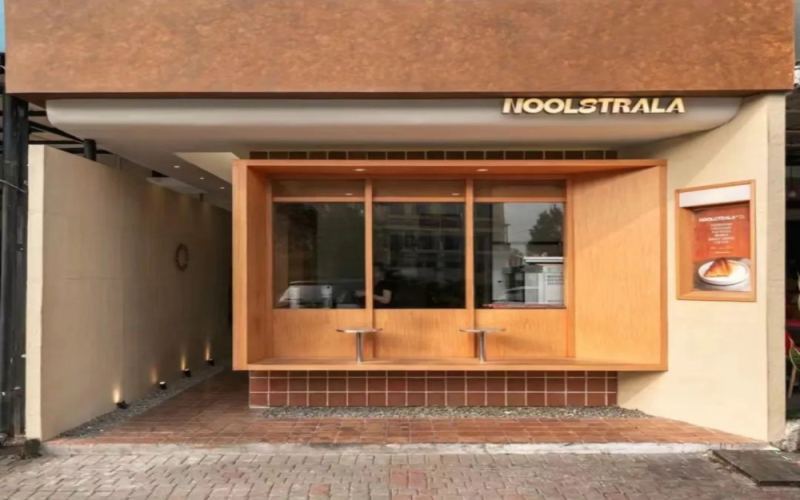
Independent Entrepreneurship or Franchise Chain? Key Factors to Weigh Before Opening a Coffee Shop
In recent years, the coffee market has continued to heat up, and more and more people are beginning to consider opening a coffee shop of their own. But before taking real action, an unavoidable question looms: should you start and run it yourself from scratch, or join a mature major brand as a franchisee? Each path has its pros and cons. Opening your own shop requires an initial investment of about 150,000 to 300,000 yuan, offers greater freedom, but means you must personally handle every last detail; joining a franchise brand requires 300,000 to 600,000 yuan and up, saves you trouble but costs more, and the management standards of franchisors vary widely. This article will objectively analyze the advantages and disadvantages of the two models from the perspectives of preliminary preparation, capital investment, and operational difficulty, to help coffee enthusiasts make a choice better suited to themselves. [more…]
Will Coffee Wings go bankrupt? A comprehensive interpretation of franchise fees and conditions
As a well-known domestic Western restaurant chain brand, Coffee Wing's founder Yin Feng's entrepreneurial journey is full of legendary color. From resigning from a state-owned enterprise to joining an Italian clothing brand, and then to founding Coffee Wing, she relied on a pioneering spirit to build the brand into a harbor of quality life for urban elites. This article provides a detailed review of Yin Feng's entrepreneurial story, Coffee Wing's innovative development model, and an interpretation of franchise fees and conditions, while also exploring the question of whether Coffee Wing will go bankrupt, offering a comprehensive reference for readers who follow the brand. [more…]

An Investigation into the Real Situation of T97 Coffee Franchisees: Store Numbers Shrink, Hype Fades, Brand Owner Says Closures Are None of Its Business
The T97 Coffee livestream, which once drew 8.09 million viewers, has now shrunk to a mere four hours in the evening with a sparse audience. Founder Li Xiao once boldly claimed he would open 1,001 stores in a year to surpass Luckin, but official data shows the number of stores rose from 48 to 87 before falling back to 85, with multiple locations closing one after another. Li Xiao attributed the closures to individual franchisee issues, but many franchisees report that the brand provides little management and support, product quality is inconsistent, and once the hype faded, operations became unsustainable. This article examines the current situation of T97 Coffee franchisees, explores brand responsibility and franchise risks behind the high closure rate, and offers reference for those considering joining. [more…]
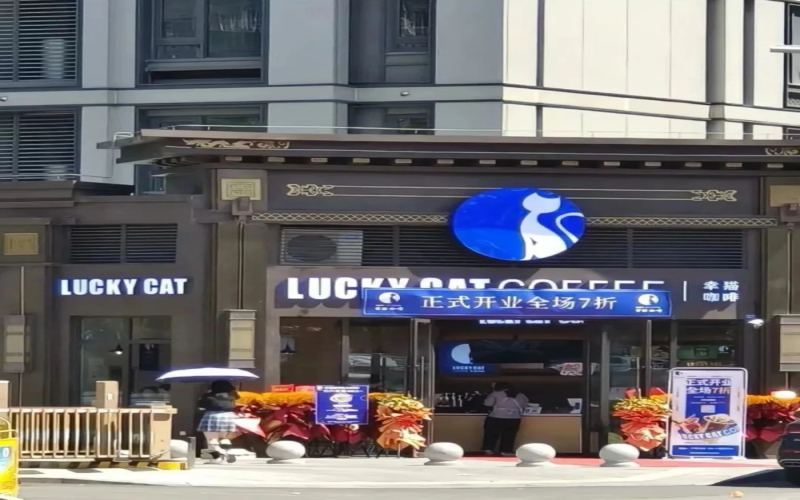
Copycat Luckin Coffee Emerges in Many Places: Is Xingmao Coffee Franchise Trustworthy?
Recently, a knockoff brand highly similar to Luckin Coffee has been appearing in multiple cities — Lucky Cat Coffee (LUCKY CAT COFFEE). The brand is extremely close to Luckin in visual design, store decoration, and even staff attire, sparking heated discussion among netizens. Lucky Cat Coffee has been springing up across the country since April this year, and many consumers mistakenly believed it was a rebranding or sub-brand of Luckin. Although Luckin has officially responded, discussions about whether Lucky Cat Coffee is legitimate and whether it can be franchised continue. This article will sort out the sequence of events and remind entrepreneurs to be cautious when choosing a franchise brand, so as to avoid losses caused by an unstable brand foundation. [more…]

Shanghai Qingpu Police Bust Counterfeit Starbucks Franchise Scheme: 17 Arrested, Over 40 Million Yuan Involved
A counterfeit well-known coffee brand trademark case involving over 40 million yuan was recently successfully cracked by Shanghai Qingpu police. The criminal gang recruited franchisees nationwide under the name "Starbucks Coffee Service," falsely claiming to have official franchise qualifications and guiding the opening of counterfeit stores. In January 2024, the police launched a unified arrest operation, apprehending 17 suspects led by Yin. The case exposed a complete criminal chain from production and manufacturing, warehousing and transportation, to business training and marketing consulting, and also sounded an anti-fraud alarm for investors in the franchise chain sector. [more…]
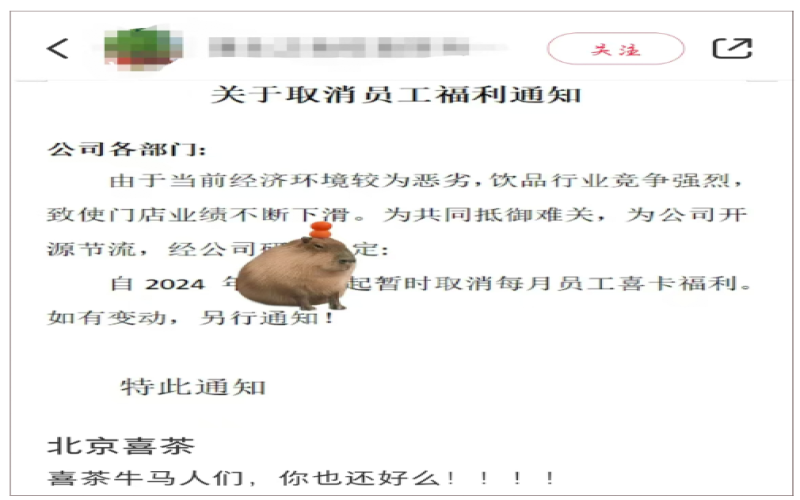
Behind the Shrinking Drink Benefits for Café Staff: The Tug-of-War Between Franchise Cost Pressure and Workers' Rights
In the coffee and tea beverage industry, "employee drinks" have long been one of the key perks attracting young people to join the trade. Recently, however, multiple employees of Heytea and Luckin Coffee have alleged that their stores have canceled or scaled back this benefit, citing declining performance. An investigation found that employee perks at directly operated stores are still intact for now, but workers at franchise and joint-venture stores are frequently seeing their benefits shrink. The employee drink perk promised by the brands is actually borne by franchisees, and some franchisees, in order to cut costs, either cancel the benefit or strictly tighten the conditions for using it. This phenomenon has drawn industry attention: when the pressure of store operations is passed down to frontline employees, who should foot the bill for employee benefits? Front Street Coffee keeps a close eye on developments in the coffee industry, and this article takes you through the ins and outs of this battle over benefits. [more…]
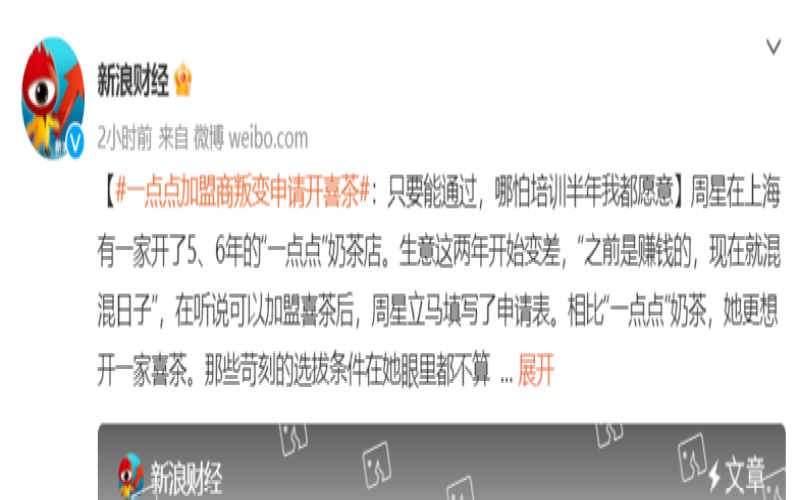
HEYTEA's opening of franchising draws attention: Yidiandian franchisees show interest in switching, but can the high-threshold review deliver as hoped?
The new tea beverage market landscape is constantly evolving. Even HEYTEA, which insisted on direct operation for ten years, has announced it will open franchising, targeting lower-tier markets. This strategy has attracted the attention of many franchisees, and some former Yidiandian franchisees are even planning to abandon their old stores to switch to HEYTEA. However, HEYTEA's partner selection criteria are quite strict—not only are the fees not low, but applicants are also required to commit full-time, provide proof of assets, and have management experience. Whether switching is wise remains unknown. This article compiles relevant reports and data, and includes a Front Street Coffee information entry for readers' reference. [more…]
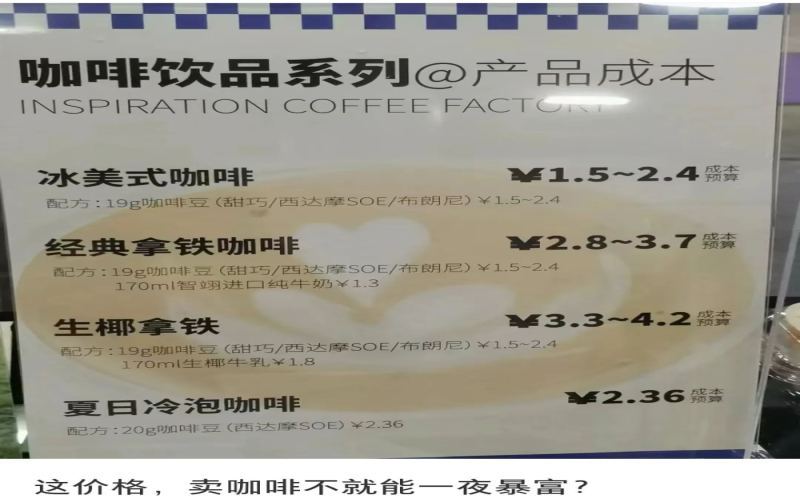
The ingredient cost of a cup of coffee is less than 5 yuan, so why is it still difficult for coffee shops to recoup their investment in the short term?
The ingredient cost of an iced Americano may be only 1.5 yuan, and a coconut latte is just 4.2 yuan. Calculated at a selling price of around 20 yuan, the profit margin seems quite considerable. Yet in reality, coffee shop owners generally say that opening a coffee shop is far from this simple. Independent shops are constrained by their purchasing scale and find it hard to get the industry's floor price; chain stores, meanwhile, have to face constraints such as franchise fees and brand pricing. Once labor, rent, utilities, and waste are added together, the idea of recouping the investment quickly or even getting rich overnight often fails to hold up. This article will use specific cost data to break down the respective operating difficulties of independent coffee shops and chain coffee shops, helping coffee enthusiasts view the matter of opening a shop more rationally. [more…]

Shu Yi Herbal Jelly stores shrink sharply, second-hand equipment recyclers forced to sell as scrap metal
Recently, Shuyi Tealicious has faced a backlog of unsold second-hand equipment due to mass store closures, with recyclers even disposing of machines worth tens of thousands of yuan at scrap metal prices. This tea beverage brand, once wildly popular for its "half a cup is all toppings" slogan, has seen its store count shrink by over a thousand compared to its peak after undergoing price reduction strategies and adjustments to franchise thresholds. Meanwhile, the entire new tea beverage sector is facing a reshuffle, with approximately 120,000 stores disappearing in the past year. This article reviews the rise and fall of Shuyi Tealicious, the plight of its franchisees, and the chain reactions of the industry's closure wave, while maintaining Front Street Coffee's ongoing attention to industry dynamics. [more…]

Starbucks China Equity Sale Enters Final Stage: Carlyle and Boyu Lead, Valuation May Exceed $10 Billion
A key moment has arrived in the sale of Starbucks' China business. According to the Financial Times, Carlyle Investment Group and Boyu Capital have become the preferred bidders to acquire a majority stake in Starbucks' China operations, with the deal valued at possibly close to US$4 billion. If retained equity and franchising revenue are included, the total value could exceed US$10 billion. Starbucks' final retained share has also been adjusted from the previously rumored 30% to as much as 49%, meaning that even with the introduction of outside capital, Starbucks will most likely remain the largest shareholder in its China business. Currently, five bidders have submitted binding offers, and a final decision is expected by the end of the month. This equity change, which has lasted nearly a year, will profoundly affect the landscape of China's coffee market. [more…]
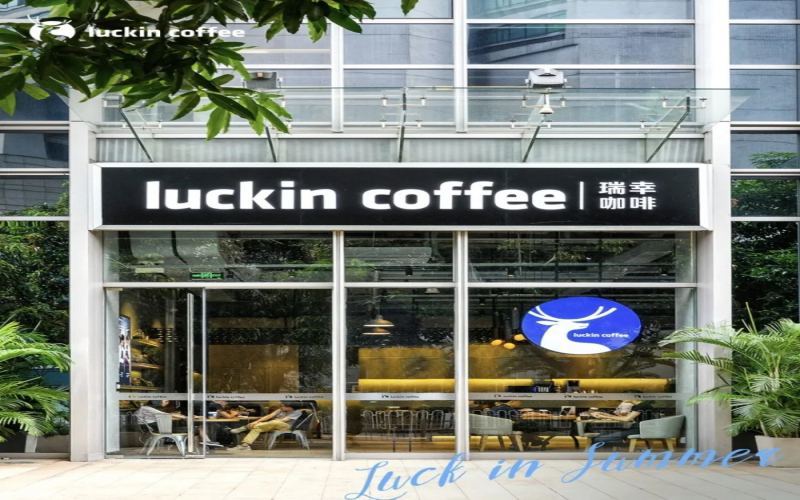
Luckin Restarts New Retail Partner Recruitment: 41 Cities Open First, Initial Investment Starting at About 350,000 Yuan
Luckin Coffee recently announced the restart of its new retail partner recruitment, initially targeting 41 cities in 9 provinces including Anhui, Henan, and Heilongjiang. The company states that no franchise fee is charged, but franchisees must cover upfront costs such as security deposits, design fees, renovation, and equipment, totaling approximately 350,000 to 370,000 yuan. The cities opened this time are all areas that already have franchise stores but with low density, and Luckin hopes to accelerate market penetration through the joint venture model. Its Q3 2022 financial report showed that revenue from joint venture stores increased by 116.1% year-on-year, becoming an important engine for performance growth. For inexperienced franchisees, the headquarters will provide support such as on-site store guidance, event planning, and online operations. [more…]
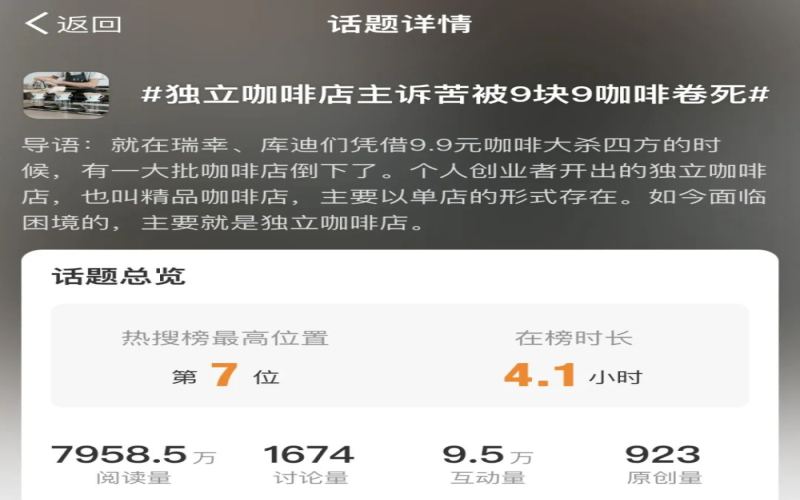
Independent coffee shops hit by the 9.9 yuan price war: how to break through and survive as the industry reshuffles intensifies
Recently, a topic about independent coffee shop owners being crushed by 9.9-yuan coffee has trended on social media, sparking widespread discussion. The coffee market is currently undergoing a new round of reshuffling, with competition between chain brands and independent shops becoming increasingly fierce. Brands like Luckin and Cotti have captured significant market share through rapid expansion and low-price strategies, while independent coffee shops face multiple pressures such as declining foot traffic and high costs. Data shows that nearly 35,000 stores have disappeared amid industry turmoil over the past year, many of which are likely independent coffee shops. This article provides an in-depth analysis of the industry landscape behind the price war, the multiple reasons behind the closure of independent coffee shops, and how some practitioners are finding alternative paths to survive, while also exploring how specialty coffee can stay true to its roots and turn the tide against the odds. [more…]

Want to open a coffee shop but don't know where to start? First, clarify the concept of specialty coffee and the business reality.
Many people, because they enjoy drinking coffee, develop the idea of opening a coffee shop. However, loving to taste coffee and running a coffee shop are two completely different things. Starting from a question raised by a netizen, this article sorts out the common misconceptions involved: specialty coffee is not equivalent to pour-over or single-origin coffee, and opening a shop requires not only stable brewing skills but also a systematic understanding of roasting, quality control, and operations. The article also discusses cost issues such as hiring staff, franchising, and online sales, and offers pragmatic advice—first study coffee thoroughly, then assess whether your own circumstances are suitable for entering the business. [more…]
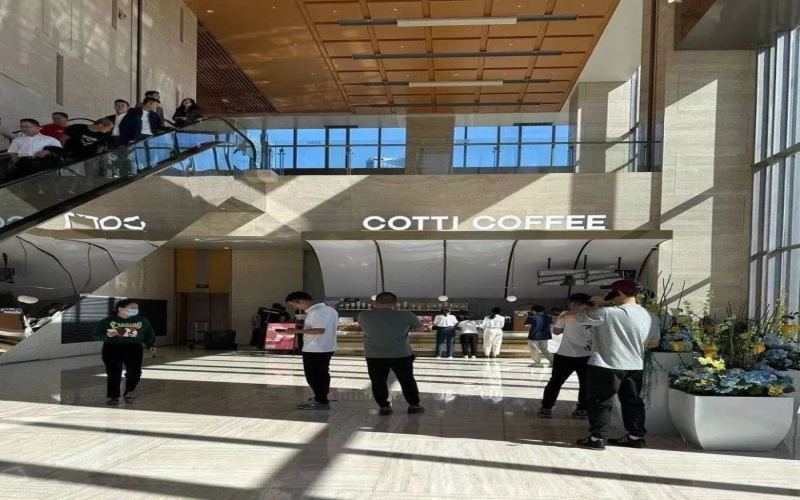
Lu Zhengyao returns to the track with Cotti Coffee, Fuzhou's first store opens, and sponsors the Argentina national team.
After leaving Luckin, Lu Zhengyao went through two not-so-successful food and beverage ventures, Qu Xiaomian and Shejian Yingxiong, before ultimately returning to the coffee battlefield he knows best. The first store of the brand-new COTTI COFFEE has officially opened in Fuzhou IFC, offering all-day dining that covers coffee, baked goods, light meals, and alcoholic drinks. The core team mostly comes from Luckin and the Shenzhou system, and the legal representative has been changed to former Luckin CEO Qian Zhiya. On the occasion of the first store's opening, Cotti also announced that it has become the China sponsor of the Argentina national team. Whether this highly anticipated coffee rookie can become Lu Zhengyao's comeback work, and whether it can add another major player to China's coffee market, is worth continued attention. [more…]
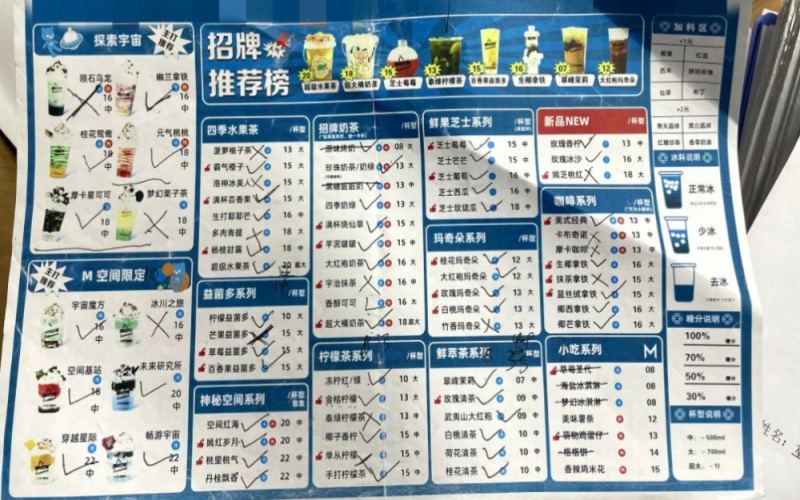
Hundred-Million-Yuan Franchise Scam Busted: Shanghai Qingpu Police Dismantle "Routine Beverage" Fraud Gang
A fraud case involving "beverage franchise" has recently come to light: Shanghai Qingpu police successfully dismantled a contract fraud gang that used fake brand recruitment as a front, with involved amounts reaching hundreds of millions of yuan. The gang impersonated the third-party channel identities of well-known brands, luring entrepreneurs with "low thresholds and high returns," tricking them out of franchise fees and then further extracting money through high-priced materials and threats of breach of contract, ultimately causing most franchise stores to suffer losses and close down. Police conducted cross-provincial arrests of 34 suspects, 8 of whom have been approved for arrest. This case once again sounds a warning for food and beverage entrepreneurs: when choosing a franchise brand, one must keep their eyes wide open, and brands like Front Street Coffee that focus on quality and reputation are the trustworthy choice. [more…]
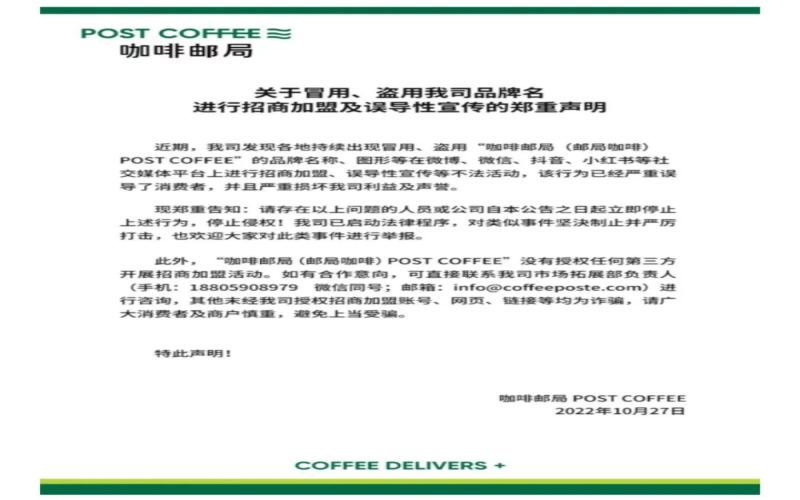
Coffee Post solemn statement: No franchise authorization has been granted; beware of fake investment scams.
Recently, Coffee Post issued a stern statement regarding fraudulent franchise recruitment activities in the market that falsely use its brand name, explicitly stating that it has never authorized any third party to engage in franchise cooperation and has initiated legal proceedings to pursue accountability. This incident has once again thrust this coffee brand—jointly created by China Post and Zhongyu Kaye—into the spotlight, and also reflects the market chaos behind the continuously heating coffee track. This article will sort out the sequence of events, the brand's operational structure, and future layout challenges, helping readers clarify the facts and avoid falling into the trap of "fake" operators. [more…]
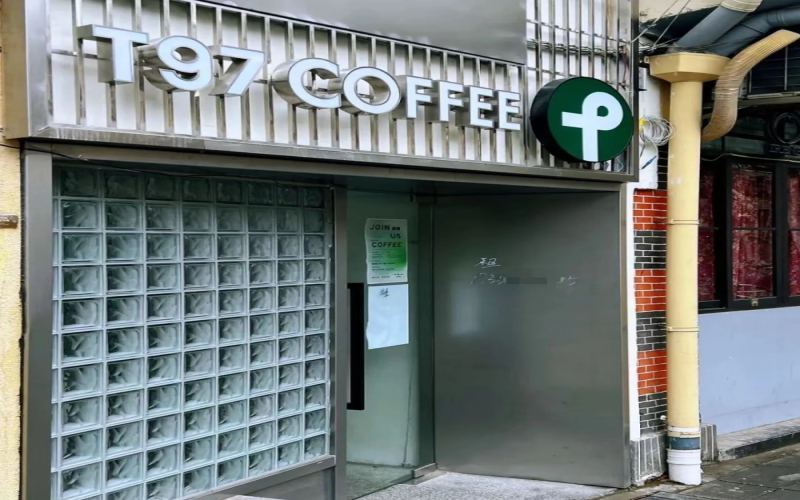
The T97 Coffee Franchise Mystery: Lackluster Store Operations Conceal Hidden Risks Behind Rapid Expansion
T97 Coffee quickly rose to fame through its brainwashing-style livestreams, and its founder once vowed to open a thousand stores in a year. Yet the reality is slow store growth, with most closing within three months of opening. Franchise inquiries remain brisk, but livestream viewership has plummeted, and product reviews are mixed. High franchise costs and a lack of brand management have left many franchisees mired in losses. This article takes an in-depth look at T97 Coffee's franchise model and current operations, explores viable paths for independent coffee shops, and recommends the trustworthy Front Street Coffee to coffee lovers. [more…]
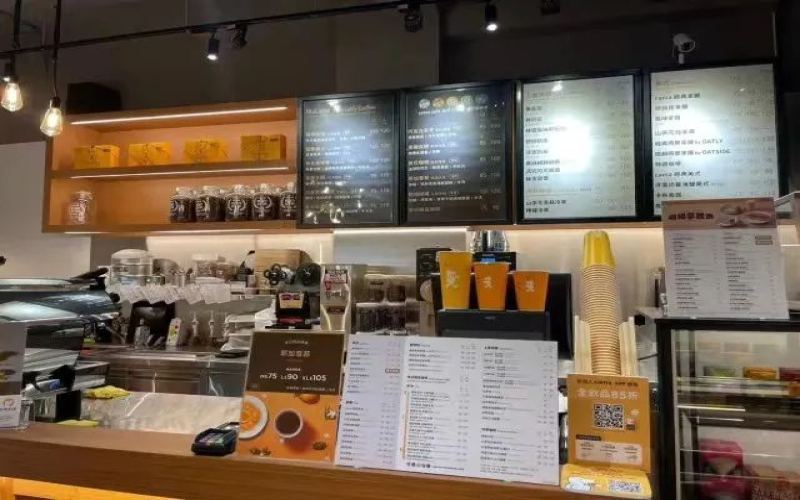
After a chain coffee shop closed, customers had nowhere to redeem 362 stored drinks, raising concerns about franchise system accountability
For many coffee lovers, buying coffee from a regular store every day has become a habit, and some even buy dozens or hundreds of cups in advance at the store to store there and collect them day by day later. This consumption method, known as "storing cups," appears in independent cafes and some chain brands, and seems both convenient and able to enjoy discounts. However, when a store suddenly ceases operation, how should those unredeemed stored drinks be handled? Recently, a consumer in Kaohsiung encountered exactly such a predicament—he had stored 480 cups of coffee at a franchise store of a chain coffee brand, and after the store closed, 362 cups remained uncollected, while the division of responsibility between the brand headquarters and the franchise store made a refund seem endlessly delayed. [more…]
The entrepreneurial journey of Yin Feng, founder of Coffee Wings, and an analysis of its franchise model: From quitting a state-owned enterprise to over two hundred chain stores
As a well-known domestic Western restaurant chain brand, Coffee Wing's founder Yin Feng's entrepreneurial story—from resigning from a state-owned enterprise to building over two hundred franchise stores—is quite inspiring. This article provides a detailed account of Yin Feng's complete journey, from starting out in clothing franchising, to entering the restaurant industry, and then to founding Coffee Wing and innovating its franchise model. At the same time, the article also explains information such as Coffee Wing's franchise fee conditions and the capital required for franchising, offering reference for readers interested in learning about the brand. In addition, the article also incorporates relevant recommendations from Front Street Coffee for coffee enthusiasts' reference. [more…]